This may fit you if
- You enjoy mathematics, physics and practical problem-solving.
- You want work that moves between drawings, laboratories and real sites.
- You care about how buildings, roads and water systems perform over decades.
 IOE Purwanchal CampusTathali · Bhaktapur
Tribhuvan University · Institute of Engineering
Learn to read land, test materials and design structures, transport and water systems for Nepal’s real terrain, monsoon and seismic conditions.
Admission guidance open · formal admission follows the IOE result

01 · Decide
A broad engineering degree for students who want to combine analytical design with field observation, materials, construction and public infrastructure.
This may fit you if
Be ready for
Civil engineering is not only architecture or site supervision. Expect structural analysis, fluids, soils, surveying, technical reporting and sustained mathematical work.
Minimum entry path
Fees and scholarship
Ask for the current total, payment schedule, university charges and written scholarship conditions. ICE advertises 50–100% merit scholarships; availability varies by intake and result.
Request the current fee breakdown02 · Experience
Each stage below connects a real learning setting to the judgement it is meant to develop.
01
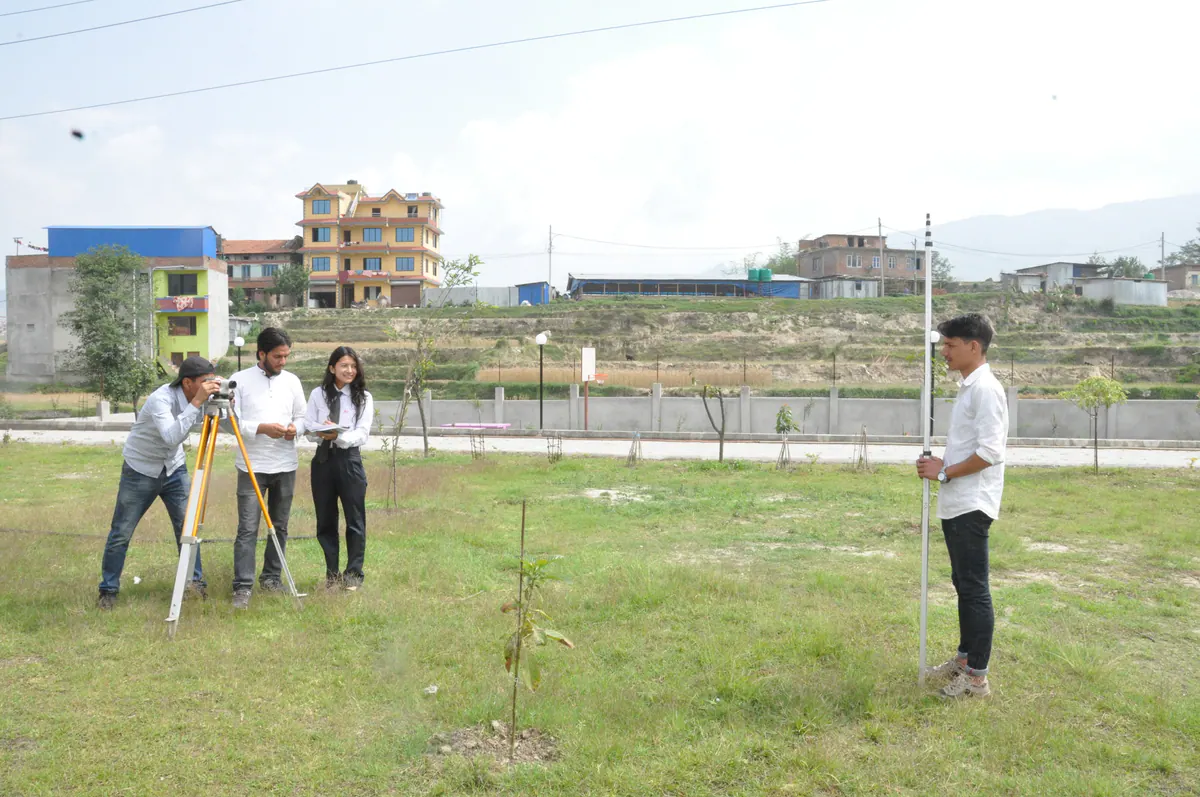
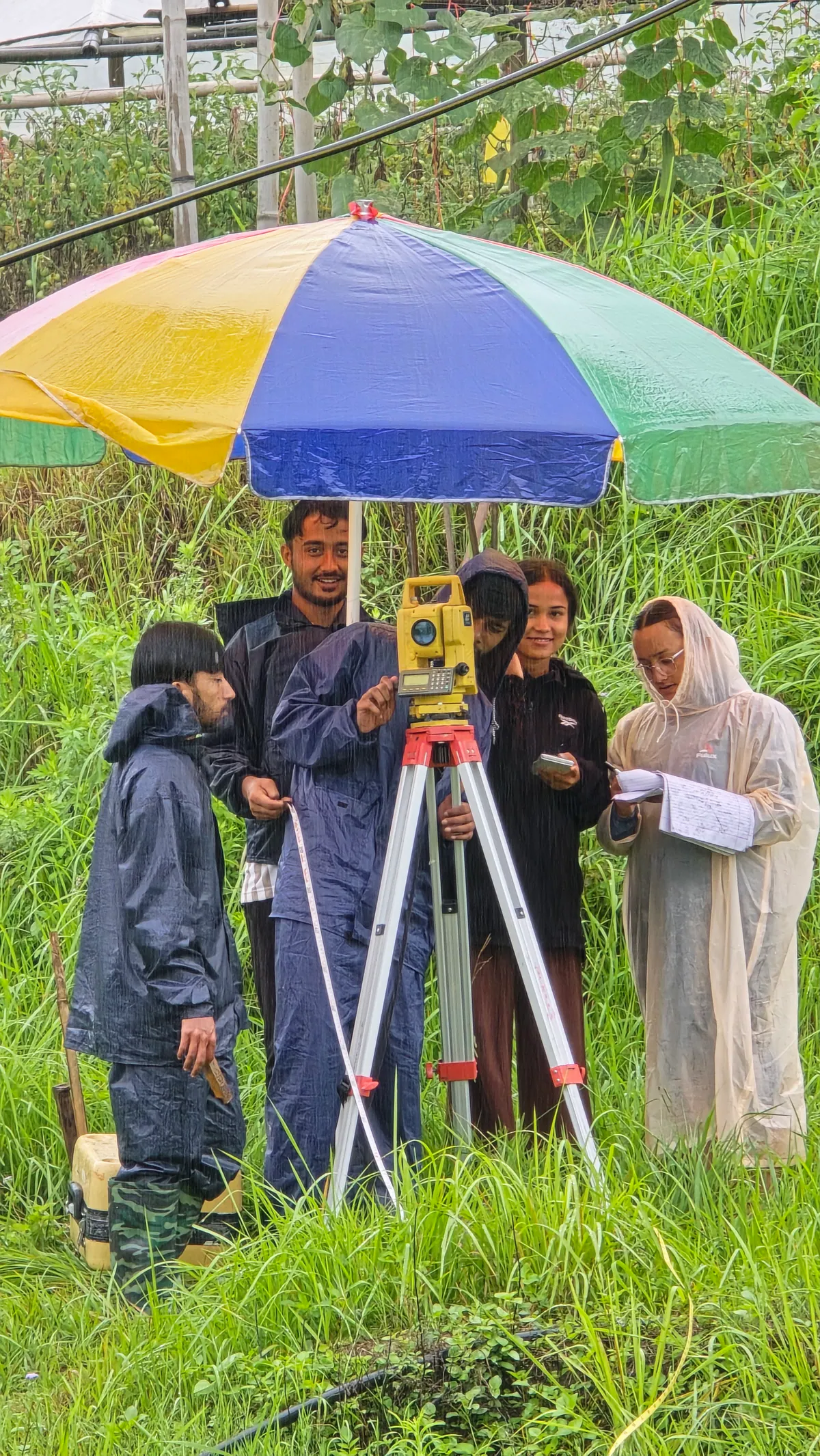
Read the ground
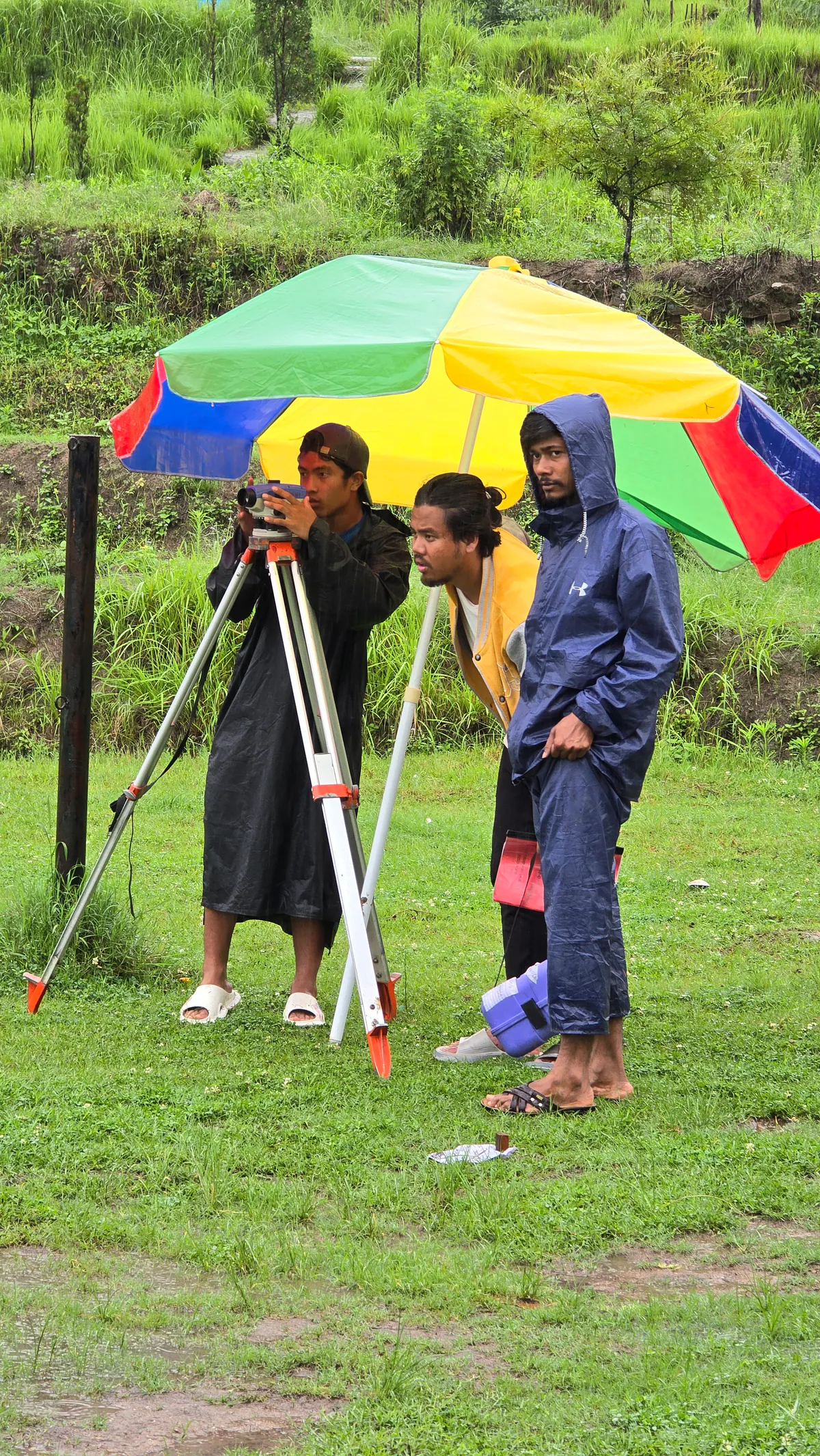
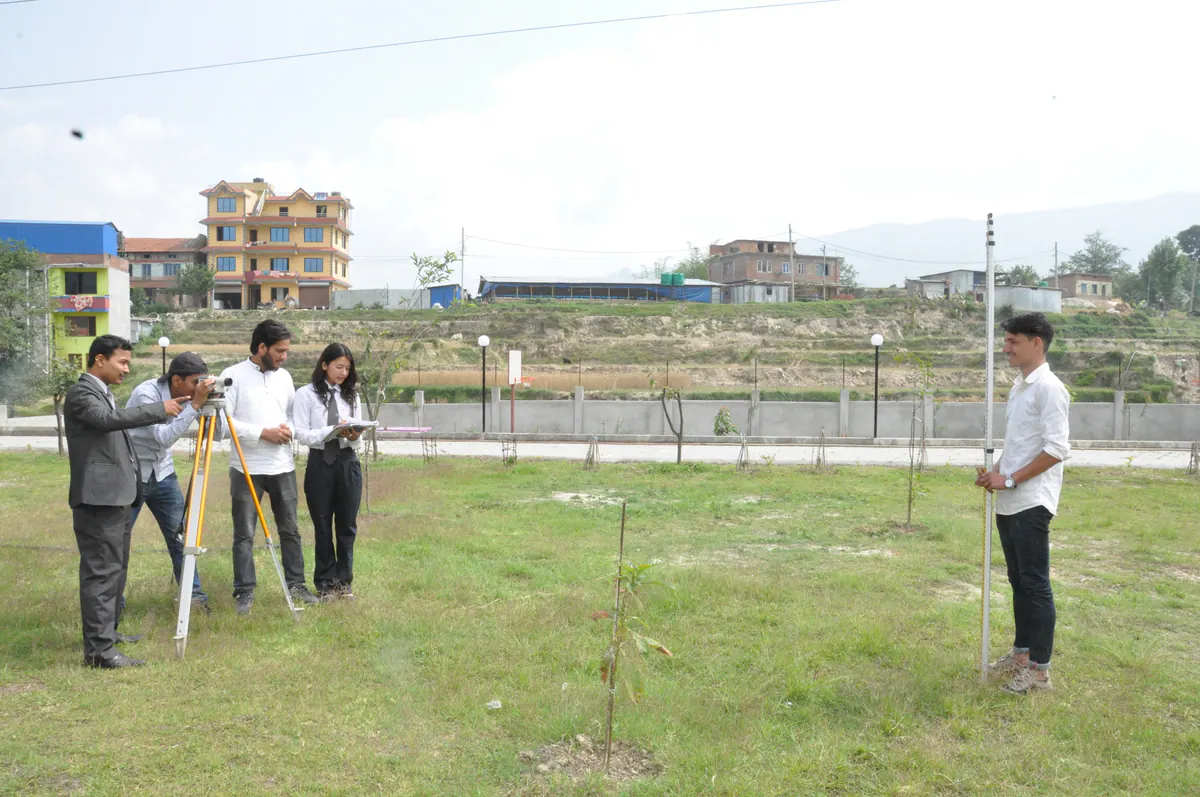
Surveying teaches you to turn coordinates, levels and observations into a dependable picture of a place. You learn why a small measurement error can shape an entire project—and why field notes, instrument checks and team communication matter.
02
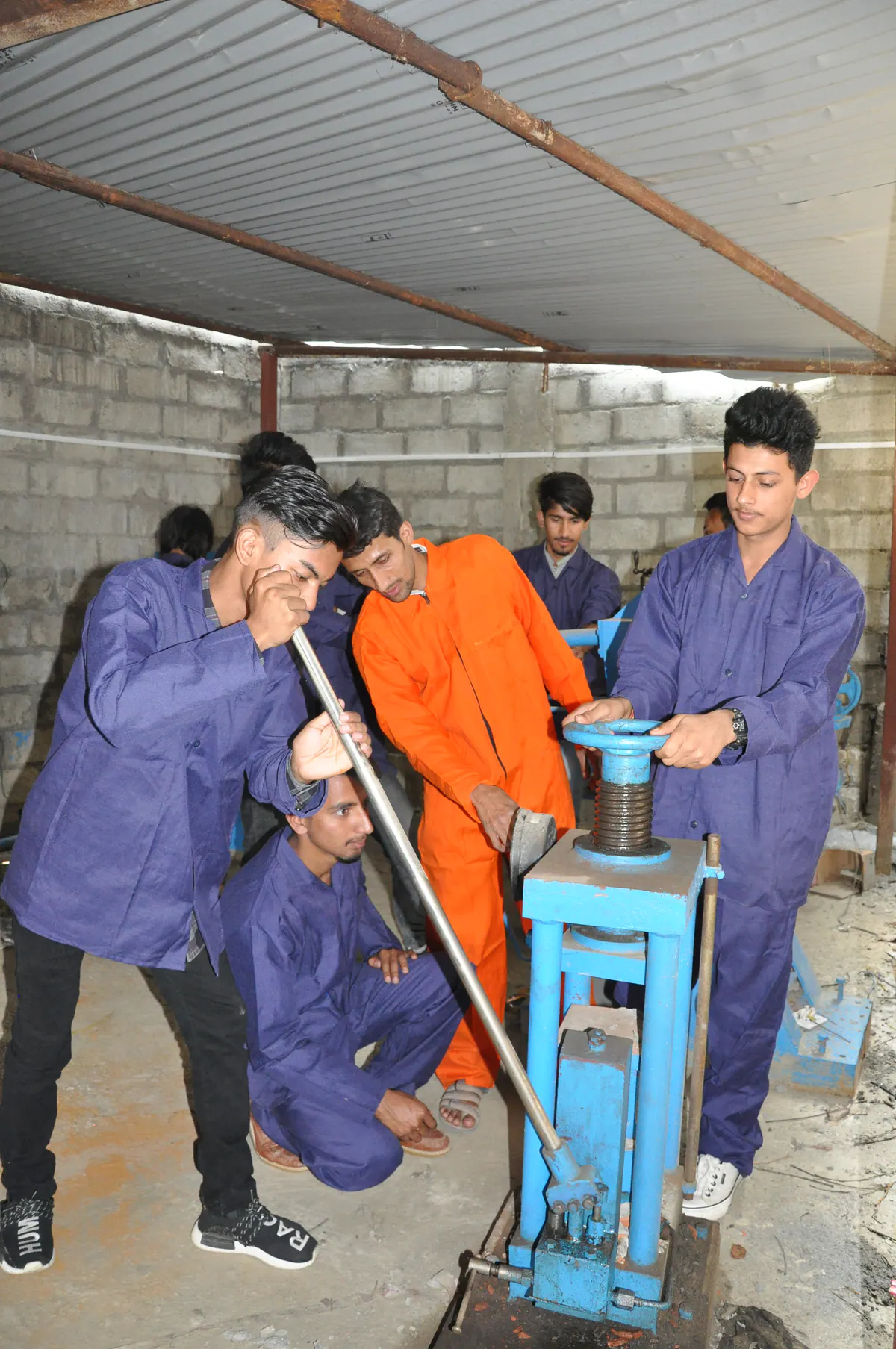
Test what carries the load
Concrete, steel, soil and masonry behave differently under stress. Laboratory work connects equations to visible failure, helping you judge strength, variability, safety and the limits of a specification before those choices reach a site.
03
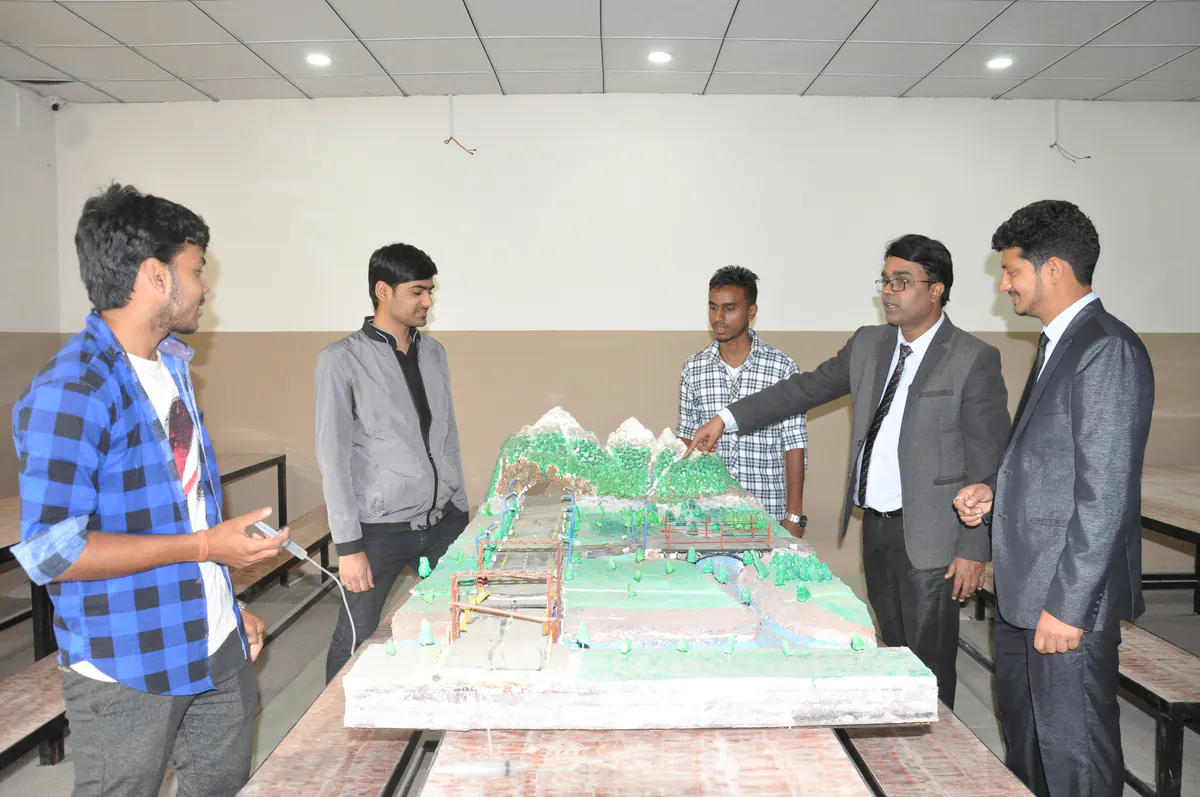
Design for consequence
Later study brings structures, transport, water, geotechnics, costing and project management together. Projects ask you to defend not just whether a solution works, but whether it is buildable, responsible and clear enough for other people to use.
03 · Curriculum
The sequence moves from scientific foundations to analysis, civil systems and an integrated final-year project. Open each year to see the indicative progression.
Build the mathematical, scientific, computing and drawing language used across engineering.
Connect mechanics and mathematics to the behaviour of sites, structures and flowing water.
Study water, transport, foundations and structural systems while applying surveying in the field.
Integrate design, economics, management and professional practice in a substantial project.
Indicative curriculum only. Tribhuvan University and the Institute of Engineering are authoritative for the official syllabus and revisions.
04 · Practice
Field and laboratory work should not sit beside theory as decoration. It is where you test whether your measurements, assumptions and calculations can support a defensible engineering decision.
05 · Direction
A civil degree can lead toward design, construction, water, transport, hydropower, public infrastructure or further specialisation. The first job title matters less than the evidence you build: sound fundamentals, field judgement and clear project work.
06 · Admissions
Admissions should help you verify fit, eligibility and cost before asking you to commit.
Share your qualification and IOE status for a direct eligibility answer.
Request the dated fee sheet, payment schedule and scholarship terms.
Arrange a visit and bring the questions that matter to your family.
Formal admission follows the published IOE process and result.
07 · Questions
No. The degree begins with engineering foundations and introduces the tools progressively. Curiosity, mathematical readiness and willingness to practise are more important than prior software or instrument experience.
It is an indicative year-by-year guide based on the current IOE structure. Tribhuvan University and the Institute of Engineering remain the authority for the official syllabus, subject codes and any revisions.
Request the dated fee sheet from the admissions team. They will explain the current intake, payment schedule, scholarship conditions and any university charges before you make a decision.
Yes. Ask admissions to arrange a campus visit so you can see relevant learning spaces, discuss eligibility and bring a parent or guardian if you prefer.
ICE advertises merit scholarships ranging from 50% to 100%. Availability and continuation conditions depend on the intake, results and published college policy, so confirm the terms in writing with admissions.